
“How can I get rid of lower back pain?” is a very common question when the lumbar area starts to bother you while walking, sitting, or even trying to rest.
Sometimes it appears after spending too many hours in the same position, from built-up tension, or from asking too much of your body. Other times, it is not a sharp pain, but rather a constant stiffness that ends up affecting your day.
Knowing what you can do first, and when it is worth seeing a professional, can make a real difference.
Why Does Lower Back Pain Appear So Often?
Lower back pain often appears when your muscles have been carrying tension for too long without recovering properly. It can be caused by poor posture, spending many hours sitting down, sleeping in an unfavourable position, or moving less than your body needs.
It can also appear after walking a lot, training, lifting weight, or going through several days of physical activity without giving the lower back enough rest.
In many cases, it does not feel like a sharp pain, but rather like a mixture of stiffness, heaviness and limited movement.
What Can You Do First to Feel Some Relief?
If the discomfort is still mild or recent, there are several tips that may help:
- Change position and avoid staying in the same posture for too many hours.
- Walk gently for a few minutes.
- Do controlled movements, without forcing yourself.
- Apply heat when you feel the muscles are tight.
- Stop activities that clearly make the discomfort worse.
These first steps can provide a fair amount of relief when the problem is just starting and you are looking for how to get rid of lower back pain quickly. Even so, if you notice the tension coming back straight away, it is worth paying closer attention to what is happening.

When Does Stretching Help, and When Is It No Longer Enough?
Stretching can help when you feel tightness or reduced mobility. The problem is that many people keep stretching even when the area is already too overloaded, contracted or irritated. At that point, continuing on your own does not always improve the situation.
If every time you move you notice your lower back feels stiff, if the relief lasts only a short time, or if there are specific points where the tension seems to remain trapped, you are probably not dealing with a simple passing discomfort. That is when a more precise approach makes more sense.
Among the first useful options, many people end up looking for physiotherapy support at our massage centre in Maspalomas when the pain does not resolve with rest, heat or gentle stretching alone.
How Do You Know if Your Lower Back Needs More Than Rest?
There are some fairly clear signs that your body is asking for more than simply waiting for the pain to go away on its own:
- Your lower back feels tense even at rest.
- You have muscle contractures that keep coming back.
- You struggle to recover normal mobility.
- You notice pain between the shoulder blades, heavy shoulders or a stiff neck as well as the lumbar area.
- The discomfort appears after physical effort or many hours of poor posture.
- Your body feels tense even when you are supposed to be resting.
When this happens, the aim is no longer just to relax a little. What you need is to help the muscles stop being in a state of constant alert.
Can a Deep Tissue Massage Help You?
Our deep tissue massage can be very helpful when you are looking to relieve pain, stiffness or movement limitations. It is often an interesting option for people with chronic lower back pain, neck and shoulder contractures, trigger points, pain between the shoulder blades or muscular overload.
It can also help when stress shows up in the body in a very physical way. It is not unusual for emotional tension to end up affecting the jaw, upper back or lower back.
Which Type of Massage Might Suit What You Are Feeling Right Now?
When you are looking for how to get rid of lower back pain, you need to bear in mind that not every case requires the same approach. Sometimes what suits you best is reducing the general overload and helping the body relax. Other times, the priority is working on specific areas where stiffness has built up.
An anti-stress massage usually works best when the tension comes with mental tiredness and a feeling of being overwhelmed.
A Swedish massage focuses more on relaxing the muscles and helping you release general tension.
When the discomfort is more related to contractures, poor posture or persistent tension, deep tissue massage is usually the most logical option. And if you have been doing intense physical activity, a sports massage can also help you recover better.
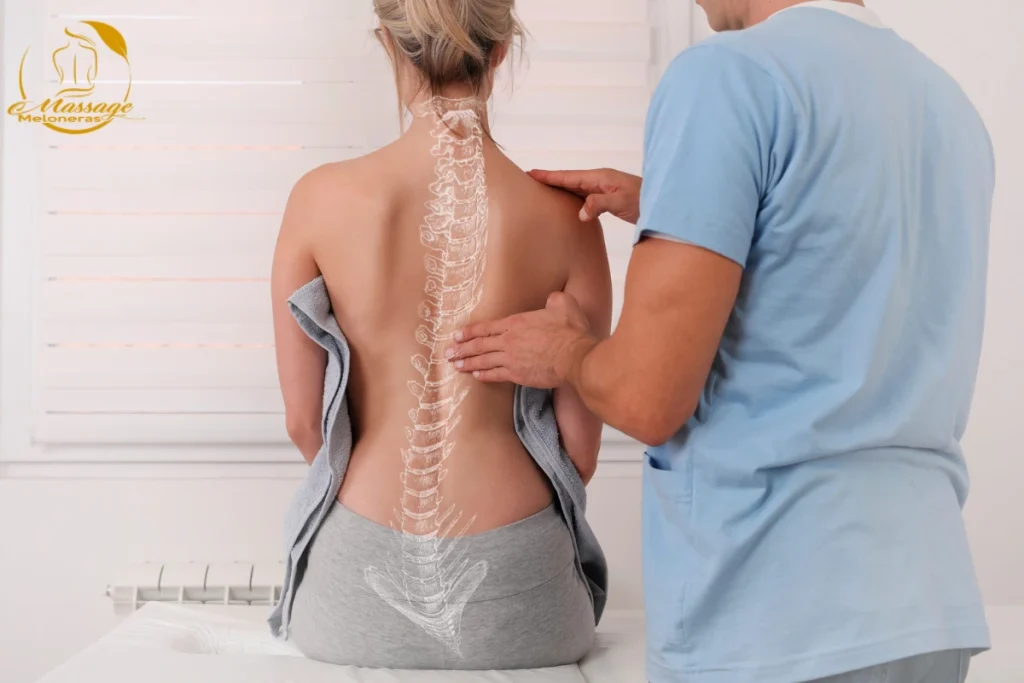
When Should You Stop Trying to Deal with It on Your Own?
Although many lower back discomforts improve with self-care, there are times when it is not advisable to keep improvising.
If the pain clearly gets worse, limits your movement too much, or you feel that you are carrying the same stiffness every day, it is worth stopping before you force the area further.
It is also important to keep in mind some warning signs that you should not ignore, such as fever, marked weakness in the legs, or problems with bladder or bowel control.
In these cases, it is not about continuing to try stretches or massages, but about seeking medical attention as soon as possible.
Listening to Your Back in Time Usually Makes the Difference
To get rid of lower back pain, it is vital to do the right thing at the right time. Sometimes it is enough to move a little, change your habits or give the area some rest. But when the tension has already settled in, the body usually benefits from more precise and professional work.
If you are not sure which technique may suit you best according to how your back feels, you can speak to one of our physiotherapists before booking. We will guide you with no obligation.